Tempur, Vispring, Hypnos, Sealy and more: what actually separates them
Tempur, Vispring, Hypnos, Relyon, Sealy and Highgrove are all on the floor at Roomes in Upminster. They're all good, and none of them is the best one, because they're built differently and they suit different people.
Here's what's actually different about each one. There's no ranking, because the only test that counts is ten minutes lying on one.
What actually separates one mattress brand from another?
Three things: what's inside it, how it's put together, and what that does for your body. Price follows from those, rather than the other way round.
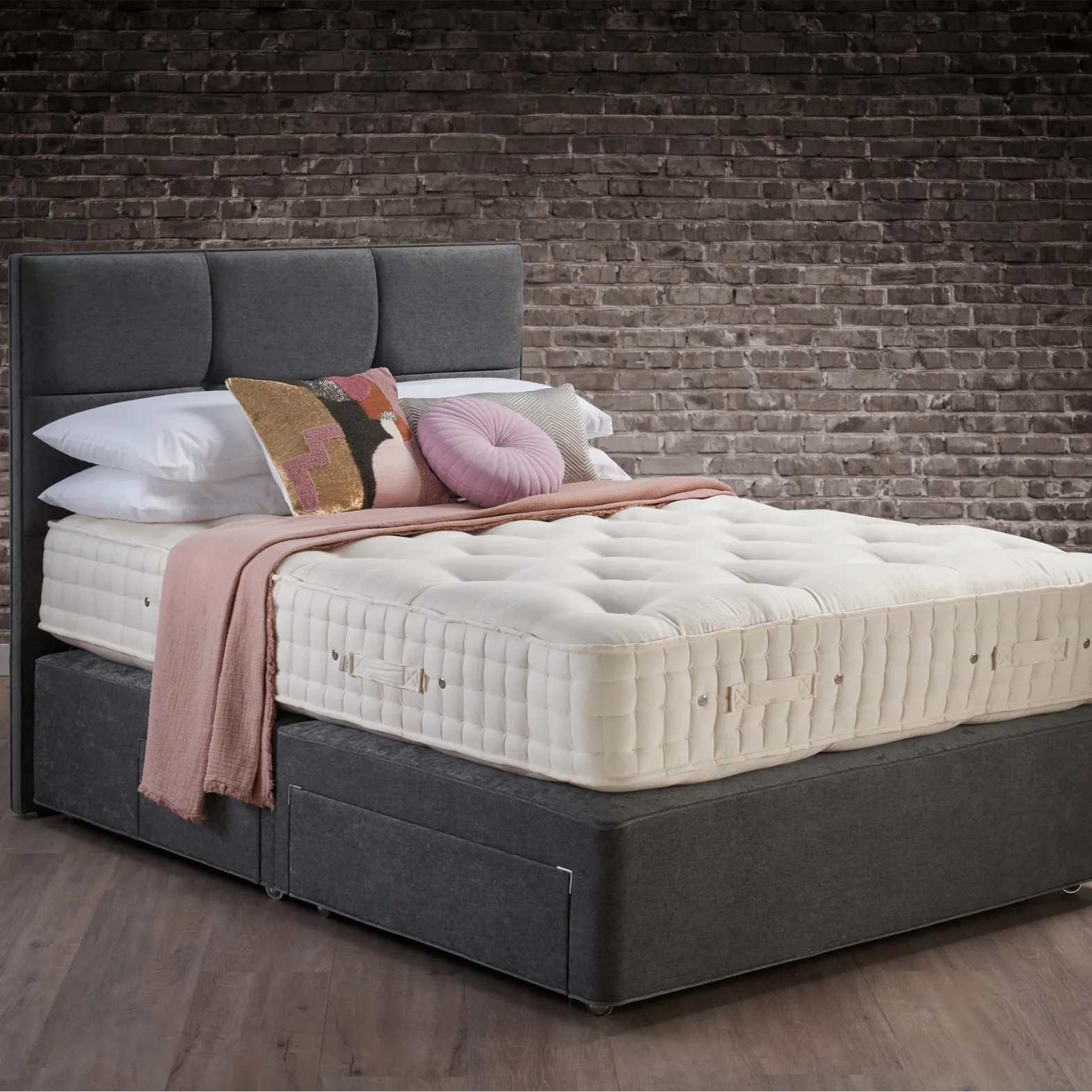
Inside, you've got springs, foam, or both, and then the comfort fillings above them. Springs are either open coil, where they're wired together and move as one, or pocket sprung, where each spring sits in its own fabric pocket.
Fillings are either synthetic or natural, and natural ones such as wool, cotton and horsehair cost more, breathe better and last longer. Some mattresses are also hand stitched and hand tufted, which is slower and shows in the price.
The thing that doesn't separate them is the word on the label. Firmness isn't standardised, so a medium from one brand isn't a medium from another.
![]()
Who is Tempur for?
Tempur suits people who want pressure relief above all, whichever position they sleep in. Instead of springs, it's made from Tempur's own visco-elastic material, which moulds to your shape, weight and warmth and spreads the load evenly.
People often call it memory foam, but it's Tempur's own material. It grew out of NASA research in the late 1960s, and Tempur has always kept the formula secret, so you won't find it in anybody else's mattress.
You might have heard that Tempur sleeps warm. That's an old reputation. Every Tempur mattress we stock has a SmartCool cover, which is designed to absorb excess heat, and it works really well.
It also absorbs movement, which helps if you share a bed with someone who moves a lot. What it doesn't have is the bounce of a sprung mattress, so changing position takes a bit more effort.
Tempur mattresses carry a 10-year warranty, and Tempur says its own clinical trials show the material relieves pressure on the back, hips, shoulders and joints.
If you're trying one, give it the full ten minutes, because the material needs time to respond to your weight and warmth.
Who is Vispring for?
Vispring suits people who want a mattress made by hand, from natural materials, and who expect to keep it for a very long time. Every Vispring bed is covered by a 30-year guarantee, which tells you how long it's built to last.
Each one is made to order in Plymouth, with individually pocketed springs and hand tufting. The fillings are horsehair, bonded British fleece wool and cotton, with no foam in them at all.
Vispring has been making mattresses since 1901, and its founder, James Marshall, invented the pocket sprung mattress.
Vispring is the most expensive thing in our bed department by some distance. Ask someone to take you through what's inside one, and you'll see where the money goes.
![]()
Who is Hypnos for?
Hypnos suits people who want a traditional pocket sprung mattress with natural fillings, without going to Vispring money. It's been made in Britain since 1938, it holds a Royal Warrant, and the Origins range we stock uses wool through the comfort layers.
Wool is the reason most people choose it. It handles temperature in both directions, so it works if you sleep hot in summer and cold in winter.
Hypnos Origins runs to several models with similar names, so ask which is which when you're in.
Who is Relyon for?
Relyon suits people who want firmer support, or a British-made mattress with natural fillings, across a wide spread of prices. It's been made in Somerset since 1858, and the range runs from ortho-style builds up to pillowtops with wool, cashmere, silk and alpaca in them.
Spring counts run from around 1,000 to 3,000 depending on the model. The ortho models, Orthopocket and Newlyn Ortho Backcare, are the ones to try if you've decided you want something firm.
It's worth saying that "ortho" is a manufacturer's word rather than a medical one, and a firmer mattress isn't automatically better for a bad back.
Who is Sealy for?
Sealy suits people who want support through the middle of the mattress and a firm edge they can sit on. The Posturepedic design puts reinforced coils in the centre third, where most of your weight goes, with high-tensile steel springs and reinforced edges to stop the perimeter breaking down.
It's one of the oldest names in the business, going back to 1881. The hybrids we stock, Apollo, Comet and Infinity, put foam comfort layers over a sprung base.
Edge support decides how much of the mattress you can actually sleep on. Sealy is worth trying if you've had a mattress collapse at the edge before.
Who is Highgrove for?
Highgrove suits people who want a well made British mattress without spending a lot. It's our entry-level range, and it's the one we recommend for guest rooms.
Entry level describes the price rather than the quality, because it's still a really good mattress.
Highgrove is a family-owned company that makes its beds in Liversedge, West Yorkshire. It's a member of the National Bed Federation, whose members are independently audited.
If you're furnishing a guest room, it's where we'd suggest you start. If you're buying for every night, it's well worth ten minutes alongside the others.
![]()
So which brand is best?
None of them, and any shop that answers that question is telling you about its own margins rather than about your back. The difference between them only matters in relation to your body and the person you share the bed with.
Pick two or three that sound like they suit you, lie on each one for ten minutes in the position you actually sleep in, and buy whichever one your spine picked.
Because firmness isn't standardised, that comparison is only worth anything on the same afternoon, in the same room. There's more on the method in why you should always lie down first and how to test a mattress in a showroom.
Compare the model rather than the badge, too. A high-end model from one brand and an entry model from another can be completely different mattresses.
Where can you try all six?
All six are on the floor at Roomes in Upminster, alongside over 70 beds and mattresses in total. That's about four miles from Romford and six from Brentwood.
Having them in one room is the whole point, because comparing a Hypnos you lay on last week with a Tempur you're lying on today doesn't give you a real answer.
Ranges change, so if you're travelling for one particular model, call 01708 255300 first and we'll check it's out on the floor.
The short version
- Tempur is pressure relieving, moulds to you and absorbs movement.
- Vispring is hand-made from natural fillings, guaranteed for 30 years, and costs accordingly.
- Hypnos is wool and pocket springs with a Royal Warrant behind it.
- Relyon is British-made and spans firm ortho builds to natural pillowtops.
- Sealy is built around support through the middle and a strong edge.
- Highgrove is British-made, our entry level, and the one we recommend for guest rooms.
None of that tells you which one you'll sleep well on. Ten minutes on each does.
Frequently asked questions
Which mattress brands does Roomes stock? Roomes in Upminster has mattresses on the floor from Tempur, Vispring, Hypnos, Relyon, Sealy and Highgrove, and also stocks Ercol bed frames. They're all out to try, and there are over 70 beds and mattresses in the department in total.
What's the difference between Tempur and a pocket sprung mattress? Tempur is made from its own pressure relieving visco-elastic material rather than springs, so it moulds to your shape, weight and warmth and absorbs movement across the bed. A pocket sprung mattress uses individual springs in fabric pockets, which gives more bounce and makes it easier to change position. Neither is better, so lie on both for ten minutes before you decide.
Is Vispring worth the money? It depends what you're buying it for. Vispring mattresses are made to order by hand in Plymouth using natural fillings with no foam, which is genuinely different from a machine-made mattress, and every Vispring bed is covered by a 30-year guarantee. If you want that construction and expect to keep the mattress a long time, yes, and if you mainly want the right feel for your back, a mattress costing much less may suit you better.
What's the difference between Hypnos and Relyon? Both are British-made pocket sprung mattresses that use natural fillings. Hypnos holds a Royal Warrant and the Origins range Roomes stocks leans heavily on wool, while Relyon spans a wider spread, from firm ortho-style builds to pillowtops with cashmere, silk and alpaca. The practical difference is feel, so try one of each.
Which mattress brand is best? There isn't one. Firmness ratings aren't standardised between manufacturers, so the only reliable comparison is lying on two or three mattresses in the same room on the same day, in the position you normally sleep in. The best brand is whichever one supports your spine properly at the price you want to pay.
Which mattress is good for a guest room? Highgrove is the range Roomes recommends for guest rooms. It's British-made, in Liversedge in West Yorkshire. It's the entry-level range in the Roomes bed department, and it's still a really good mattress.
Does a higher spring count mean a better mattress? Not on its own. More springs can mean better support and a more responsive surface, but the quality of the springs and the fillings above them matters just as much, and two mattresses with the same count can feel completely different. Treat the number as one detail among several rather than a score.
Where can I try Tempur, Hypnos and Vispring in the same place in Essex? Roomes Furniture & Interiors in Upminster has all three on the floor, plus Relyon, Sealy and Highgrove. It's at 22-24 Station Road, Upminster, RM14 2UB, about four miles from Romford and six from Brentwood, and it's open seven days a week.
- 12th October 2026