
Which Dining Table Shape Is Best for Your Home?
As a place where you tend to share the most memorable times with friends and family, a dining table is a cherished piece in any home. Here at Roomes, we value the memories of love and laughter shared around your table as much as you do, and would love to help you find the right table to make many more.
Here's our guide on things to keep in mind when choosing the perfect shape for your dining table:
Function
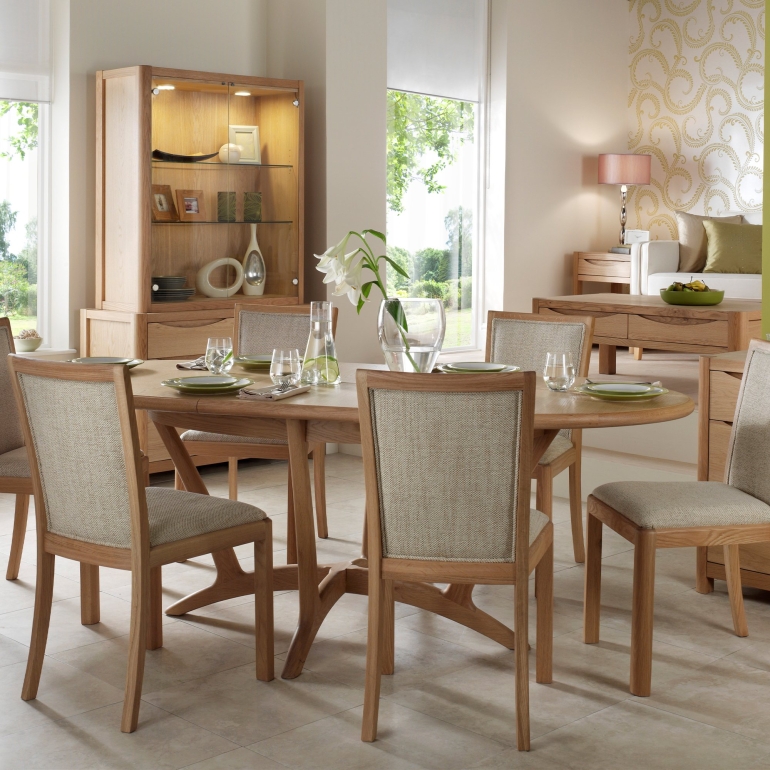
The best dining table is one that suits your needs perfectly. Whether you’re hosting a big meal or simply enjoying a family dinner, make your table work for you by highlighting your main usage. If you host large numbers fairly often, an extending table is the best choice to provide enough seating for everyone.
Size
Consider the proportions of the room and allow enough space to comfortably move around the table. Let the dining table stand out as the heart and soul of the room it’s in.
Finish
The look of your dining table should work well within the design scheme of the room it is in, as it will often be the first thing that stands out visually. Wood finished tables create a warm, laid back and welcoming atmosphere; while whitewashed, marble or ceramic tables feel sleek and modern, perfect for contemporary homes. For more durable options, look for easy-clean surfaces that are less prone to scratches and stains.
With so many different shapes and sizes to choose from, choosing something comfortable that doesn’t compromise on style can be hard. Here’s our guide on picking a shape that works best for you:
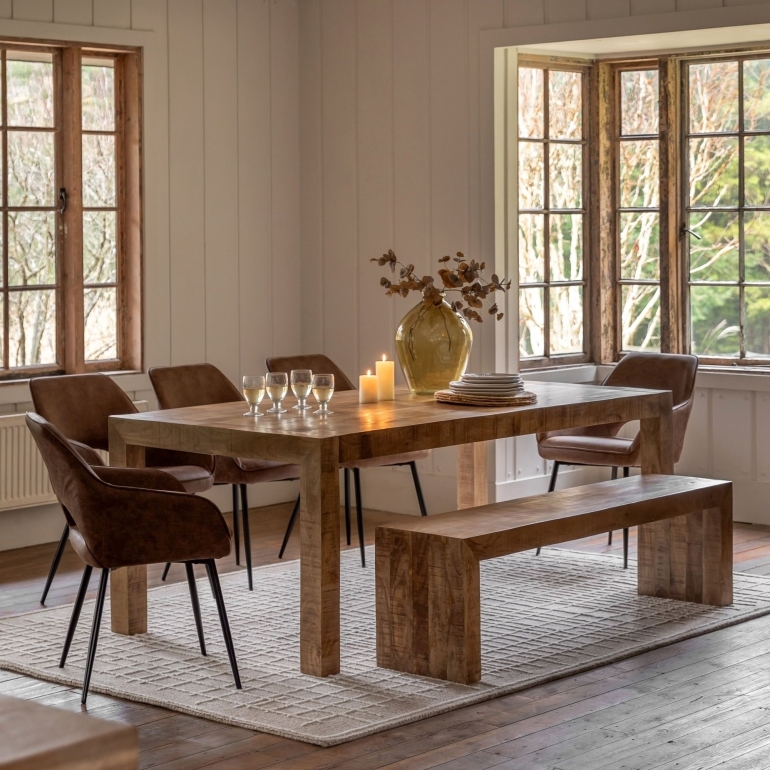
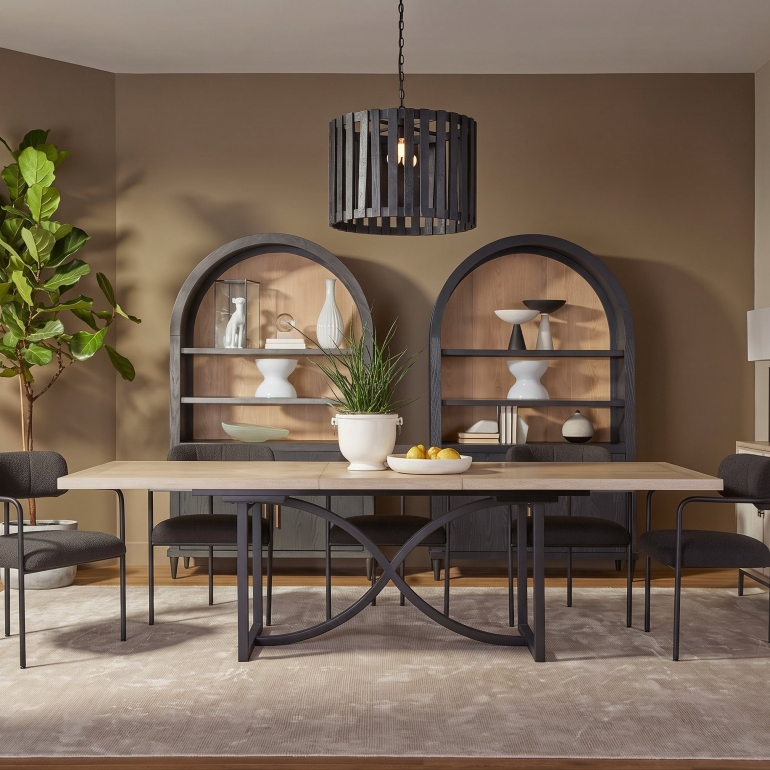
Rectangular
This is a timeless and versatile shape - the clean lines fit wonderfully into both contemporary and classic homes. The symmetrical shape adds a sense of visual calm to a dining space. If you enjoy hosting often, rectangular dining tables are the perfect choice.
![]()
Square
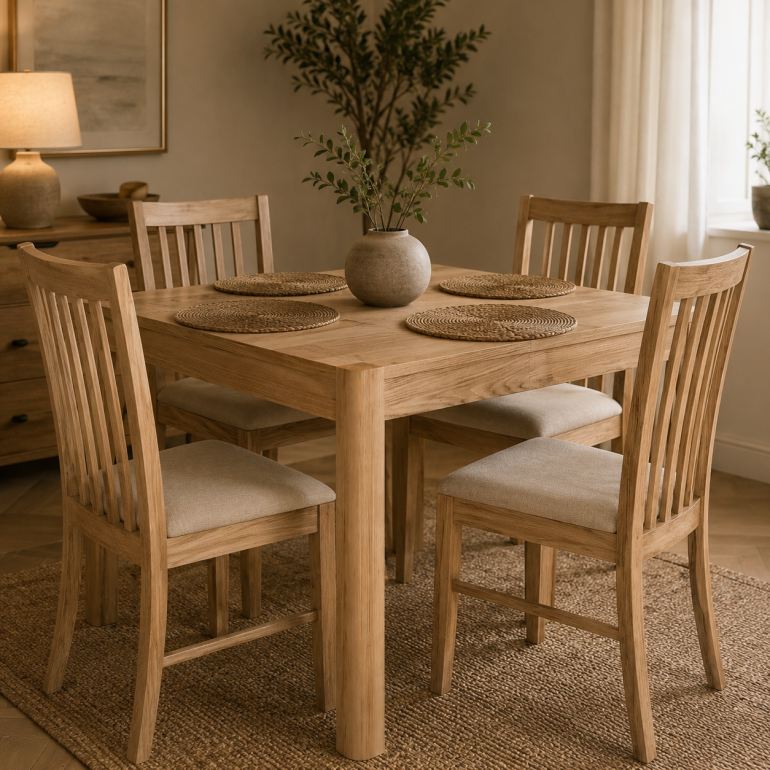
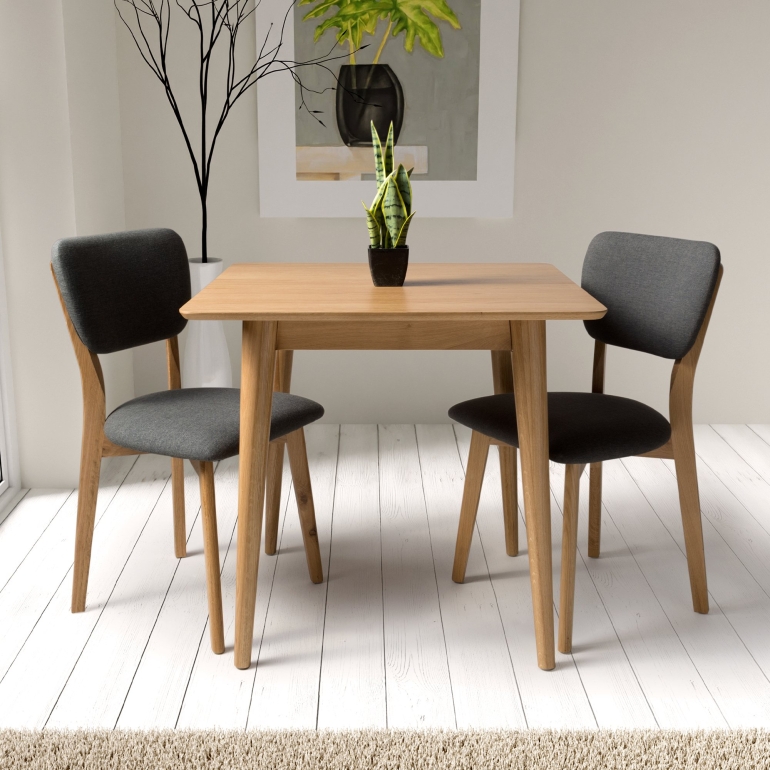
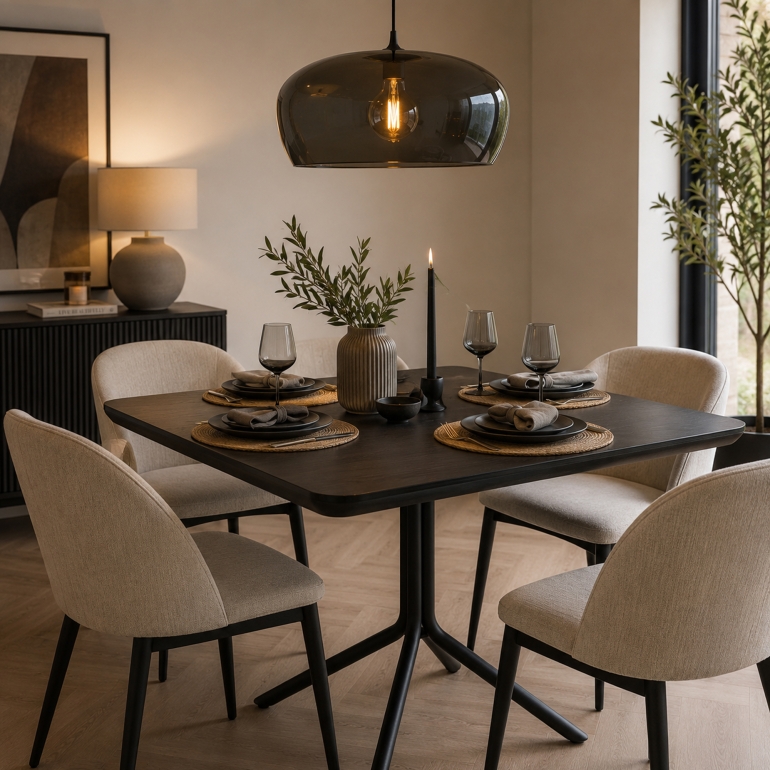
The straight edges and compact size make a square table blend into the room perfectly. This is a great choice for smaller rooms, or those that prefer more intimate dinners. This is a versatile a shape as a rectangular table, and will lend itself to any design scheme.
![]()
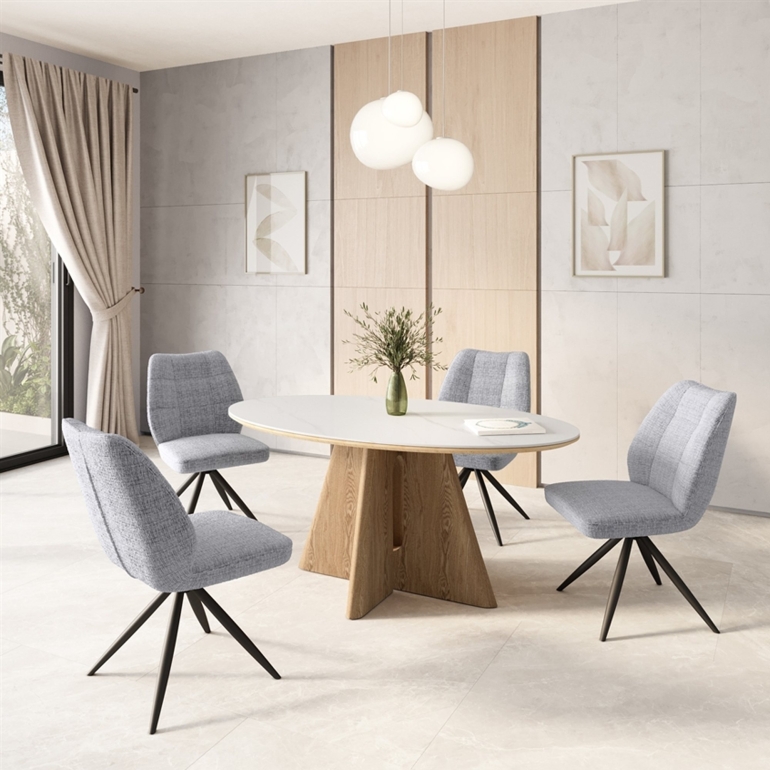
Round
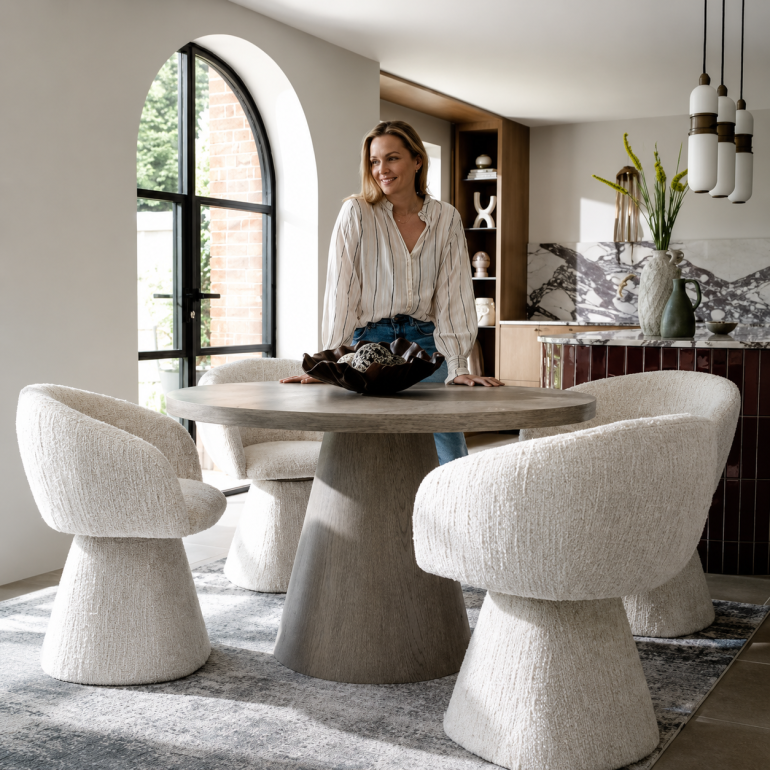
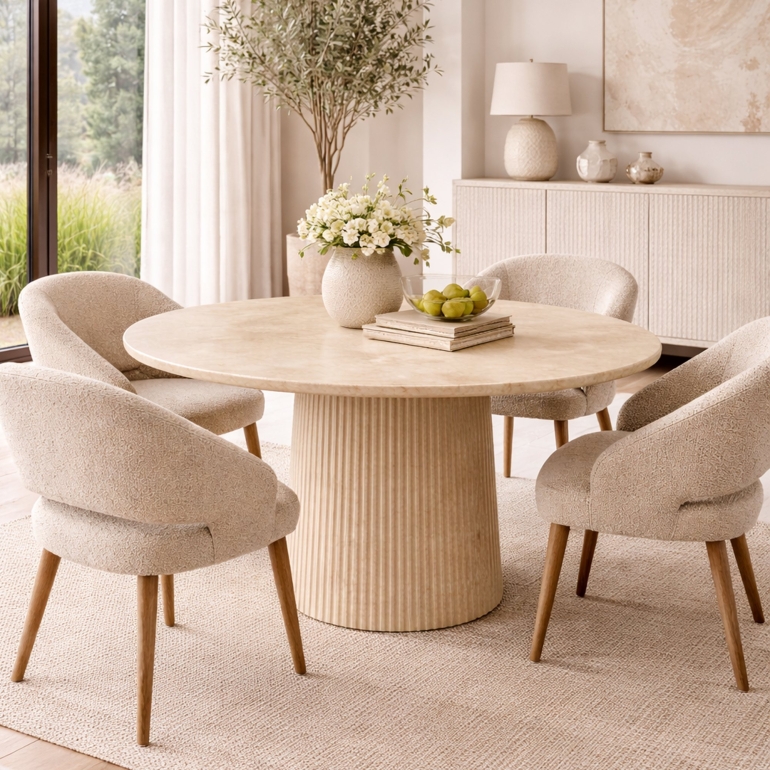
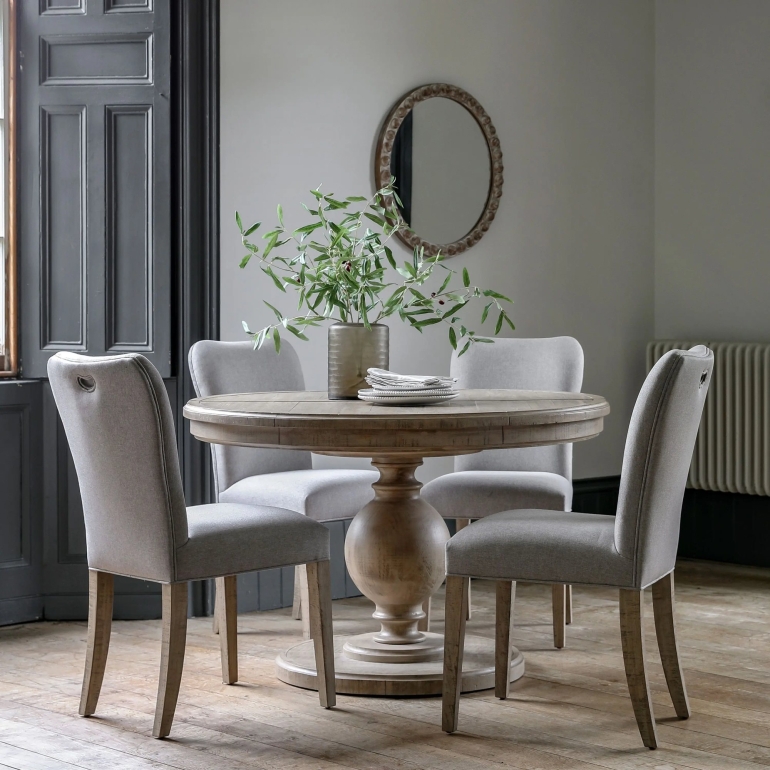
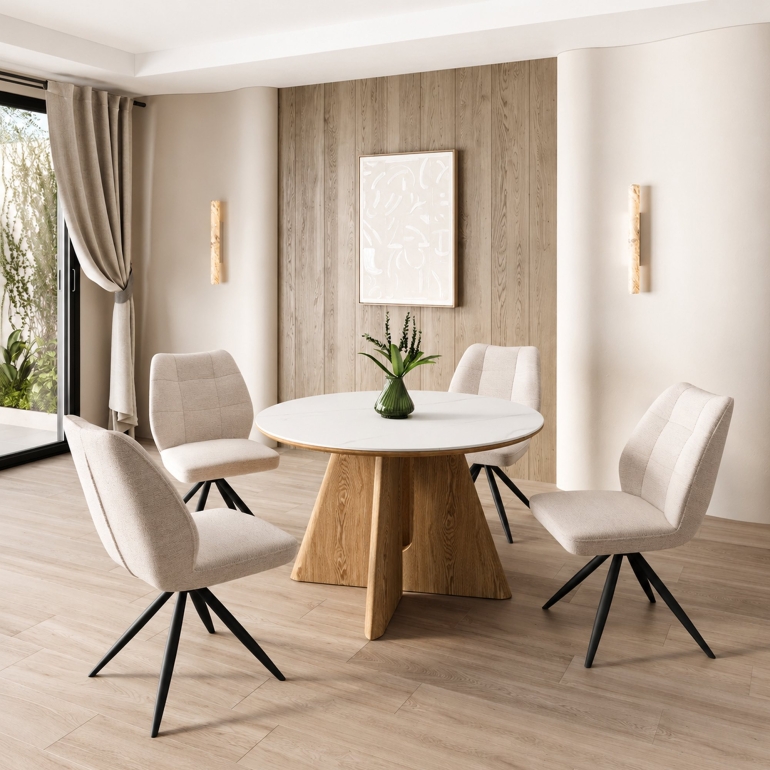
Round tables work best if you prefer intimate gatherings, and are a good alternative to square tables for a compact dining space. Round tables make for more sociable and inclusive gatherings since everyone can easily see and talk to one another. However, it’s always a good idea to ensure you leave enough space around the table for ease of movement.
![]()
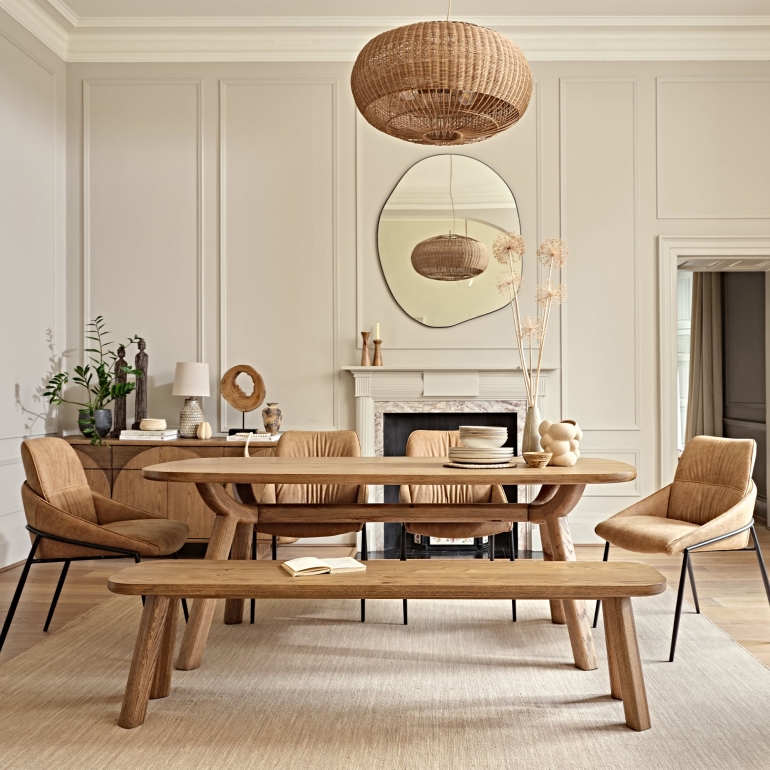
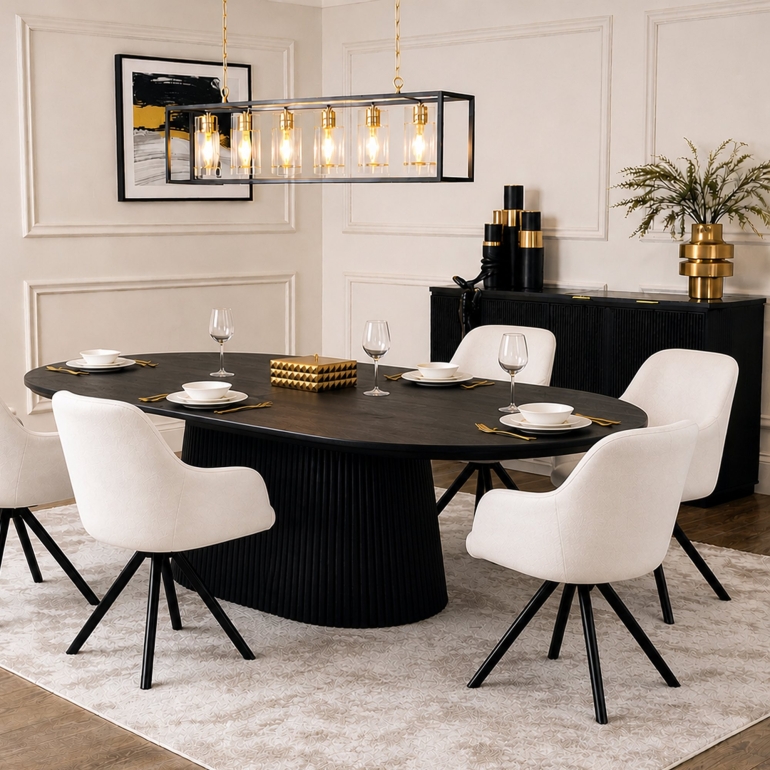
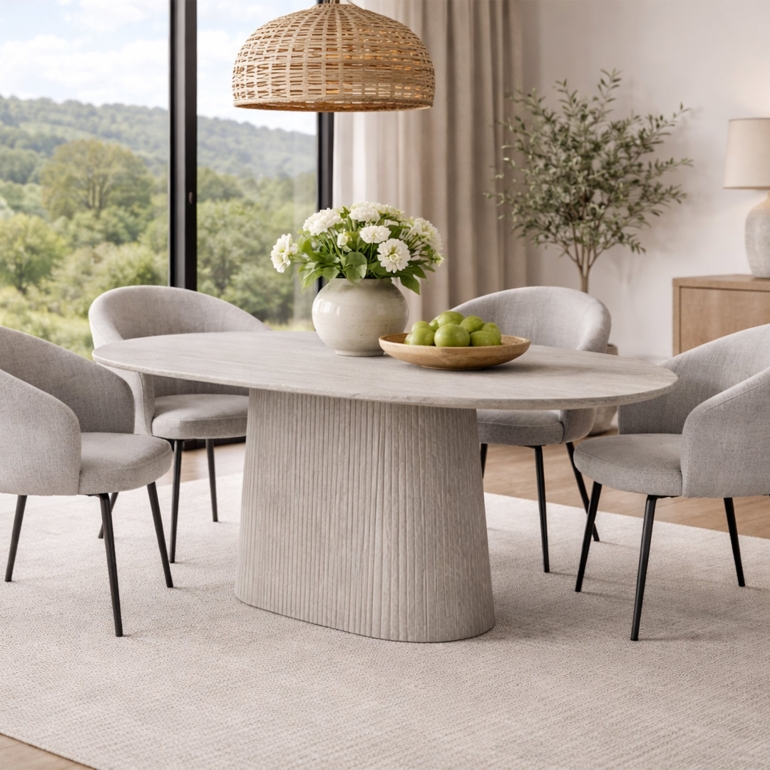
Oval
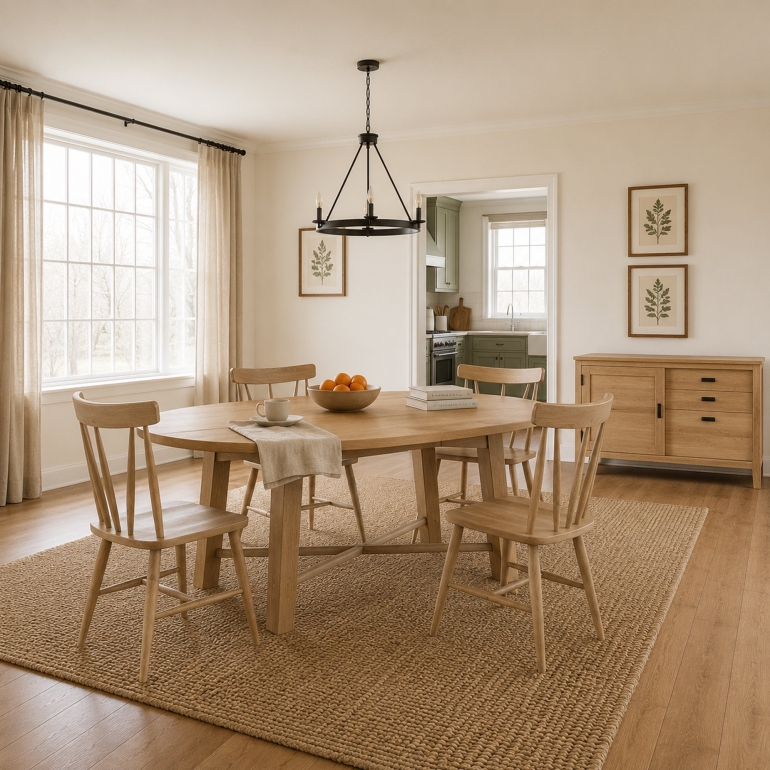
These tables retain the larger proportions of a rectangular dining table, while introducing calming curves and organic charm into your home. This fluid and relaxed quality makes oval tables lend themselves to open plan living spaces that require easy transitions between living and dining areas. This is a popular choice for those who like to host, as the rounded edges feel very welcoming.
![]()
Top tips from our Interior Design Team for styling each shape:
Rectangular:
- A runner or seasonal garland along the length of the table in the middle is perfect for those that like their dining table to make a statement
- Add a chandelier or long bar pendant light above for a refined look
- Candles or vases of varied heights placed in the centre are a welcoming touch
- Simple Cross, Ladder or Spindle back chairs complement the clean lines of the table
- Use round placemats for a design contrast
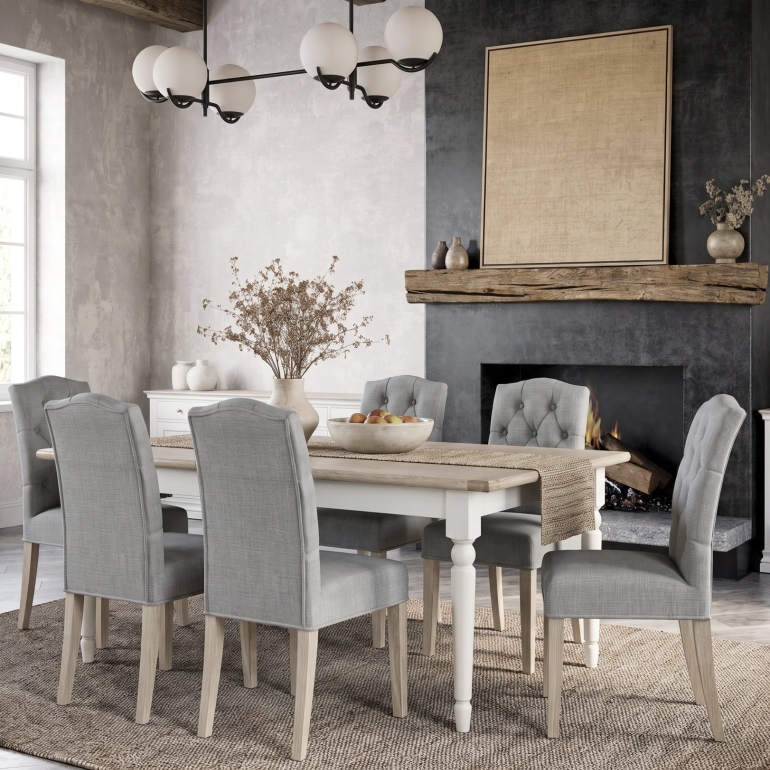
Square:
- One central vase or pillar candle, or decorative bowl of seasonal fruit for a considered look
- A short easy-clean table cloth makes it durable for regular and intimate family meals
- Statement bar or pendant light above for ample illumination
- Round or organically shaped placemats add a contrast
- Straight or slatted back chairs match the edges of the table, choose an upholstered seat for extra comfort
Round:
- Place a few small ornaments and candles in the centre, on a round tray or a decorative round mat
- Wedge or organic shaped placemats create a design contrast
- Curved back dining chairs fit in perfectly, choose chairs upholstered all over for creating a space that lets you linger on even after a meal
- A pendant light or a small chandelier above provides illumination while complementing the shape
- Consider a sculptural organic shaped object in the centre for a contemporary design-led touch
Oval:
- Round or organic placemats for a contemporary feel
- Upholstered chairs or rounded chairs help add to the laid back and relaxed charm of the space
- Long bar pendant or statement chandelier lighting is a great choice as it makes a statement
- Add in organic shaped decorative objects, flowers or candles in the centre to create a welcoming atmosphere when hosting
- If you love the shape and contours of the table, let it stand out as the main visible focus by keeping decor and table linens to a minimum
Frequently Asked Questions...
What dining table shape is best for a small space?
Round and oval dining tables are popular choices for smaller spaces because their curved edges can make it easier to move around the room. An extending dining table can also provide extra seating without permanently taking up additional floor space.
Are round dining tables more sociable?
Round tables can create a sociable dining experience because everyone faces towards the centre and there is no designated head of the table. They're particularly effective for smaller groups and informal entertaining.
What dining table shape seats the most people?
Rectangular dining tables generally offer the greatest seating capacity, particularly in larger dining rooms. Extending rectangular and oval tables are useful if you regularly need additional seats for guests.
Which dining table shape makes a room look bigger?
Round and oval tables can help a room feel more open because their curved edges create smoother sightlines and circulation. Tables with slimmer legs or pedestal bases can also reduce visual clutter.
How much space should you leave around a dining table?
As a general guide, aim for enough clearance between the table and surrounding walls or furniture where possible. This gives diners room to pull chairs out and move comfortably around the table.
- 24th August 2026


